
California lore contains lots of strange and wonderful stories. One of the best, I think, features a chance encounter in 1852 between James P. Beckwourth—a freed slave, famous guide, noted spinner of tales, and somehow a Crow chief— and an eleven year-old Ina Coolbrith, who would later, after a long literary career, become California’s first poet laureate. The story of their encounter not only forever links the lives of these two famous persons, it also ends in a peculiar geographic symmetry.
Beckwourth Pass
In 1841, Ina Coolbrith—originally Josephine Donna Smith—was born in Nauvoo, Illinois into a very prominent family. Her father, Don Carlos Smith, was the brother of Joseph Smith, founder of the Church of Jesus Christ of Latter-day Saints. After her father died, Coolbrith’s mother, whose maiden name was Agnes Coolbrith, entered a Levirate marriage to her brother-in-law, Joseph. But after his 1844 mob murder, Agnes left the Saints community and married again, this time to lawyer William Pickett. In 1851, that blended family—including by then, Ina’s two half-brothers—determined to emigrate to California. For Ina, not even a teenager, it was a memorable undertaking, especially because of her encounter with Jim Beckwourth, an encounter that made a deep and permanent impression on the little girl.
Not long before, in spring of 1850, Beckwourth had been hunting gold in Feather River country. In his 1856 memoir—“written from dictation” by T. D. Bonner—he described the terrain:
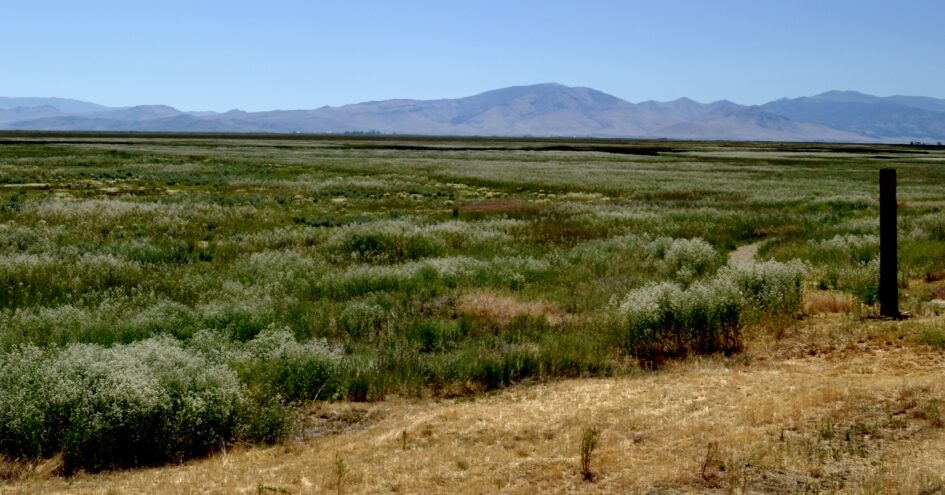
It was the latter end of April when we entered an extensive valley at the northwest extremity of the Sierra range. The valley was already robed in freshest verdure, contrasting most delightfully with the huge snow-clad masses of rock we had just left. Flowers of every variety and hue spread their variegated charms before us; magpies were chattering, and gorgeously-plumaged birds were caroling in the delights of unmolested solitude. Swarms of wild geese and ducks were swimming on the surface of the cool crystal stream, which was the central fork of the Rio de las Plumas, or sailed the air in clouds over our heads. Deer and antelope filled the plains, and their boldness was conclusive that the hunter’s rifle was to them unknown. Nowhere visible were any traces of the white man’s approach, and it is probable that our steps were the first that ever marked the spot. (515-16)
Even as he marked the natural beauty of the terrain, Beckwourth spotted in the distance what he believed to be a pass across the Sierra. He was right, and Beckwourth Pass, at just over 5,000 feet, turned out to be the lowest pass across the Sierra crest. Beckwourth (or Bonner) wrote that he could create “the best wagon-road into the American Valley approaching from the eastward” (516). He set about developing the trail and expected that the low-lying pass would prove popular with emigrants looking for a relatively easy way across the crest.
Bonner, supposedly a traveling justice of the peace and an agent of the New Hampshire State Temperance Society, may have had as much or more to do with the lush language as Beckwourth did, despite what a skeptical western scholar, Noreen Lape, memorably describes as Bonner’s “preposterous claim” that the over 500 page volume was all faithfully taken as dictation from Beckwourth himself (24). Though, it must be said, Beckwourth was a veteran spinner of tales, as Terry A. Del Bene writes:
Beckwourth unabashedly liked to talk about himself to anyone who would listen. In the process he left an impressive number of stories about his adventures and misadventures. Jim was somewhat of an entertainer in social settings. Embellishment came as second nature to the storyteller. Jim did not see himself as a chronicler speaking to history. Some stories about him are true, while others are loosely based upon fact. Yet more recollections were made up by James, and more made up by others, including his chosen biographer T.D. Bonner. Bonner is credited with polishing up Beckwourth’s recollections and seems to have invented a few details in the process.
Still, howsoever the language came to be, it’s a striking description, and one that still corresponds well to much of today’s Sierra Valley.
Beckwourth Pass today lies along Highway 70 at the north-eastern edge of the valley. Drive west from there and you glide along a slightly elevated road that opens to views south over ranch and farm land and that blends onto a panorama of a mostly flat wetlands-laced landscape that stretches for miles. Of course, the valley has been changing since Beckwourth’s time, but I think that much of the terrain would still seem familiar to him. You can get a good sense of why from materials offered by the Sierra Valley Preserve Nature Center, both online and presented by onsite interpretive panels.
According to these, the Sierra Valley is the largest freshwater wetland in the Sierra Nevada and an important part of the Pacific Flyway, a place where, thanks to the varied habitats, more than 280 species of birds—migratory and perennial—may flock. Besides avian abundance, the astonishing diversity of wildlife also includes weasels, otters, and pronghorn. The middle fork of the Feather River (Rio de las Plumas in the passage cited above) helps to maintain shallow and deep-water wetlands, leaving much of the valley verdant, even during a warmish July when I recently visited.
Not long after Beckwourth’s discovery in the far west, a very young Coolbrith—still Josephine Donna Smith—and her family joined a California-bound wagon train, which eventually made its way west to the eastern foot of the Sierra Nevada Range. While the party rested there, Beckwourth himself rode into camp (George 20) and offered to guide them to California across his recently discovered pass. Coolbrith later recalled that hers was the first party to cross the pass, a story that persists in countless retellings (just Google it) that demonstrate how deep an impression the experience left on the young girl.
Some of the particulars of the tale, however, remain unsettled. Biographer Aleta George, after surveying various contradictory accounts and what little evidence exists in the historical record, believes that Coolbrith “was mistaken in claiming that hers was the first party to enter California over the pass,” as she thought, but that nevertheless the gist was true: Coolbrith and her sister were indeed riding with Beckwourth when they reached the summit of his pass and Beckwourth proclaimed, as the accepted story goes: “Here is California, little girls. Here is your kingdom” (21).
I wonder if he really said that. Too bad Bonner hadn’t been around to record it and add it to Beckwourth’s memoir. Whatever the case, it was for Coolbrith an auspicious arrival, and it set the table for her sometimes difficult reign as California literary royalty.
Songs from the Golden Gate
With her family, Coolbrith spent her next few years living in various places in California. She turned to writing poetry as a student in Los Angeles, publishing her first poem, “My Childhood’s Home,” in the Los Angeles Star in 1856 when she was just 15 years old (George 8). After leaving a violent marriage and suffering the loss of an infant child, she and her family moved to San Francisco where Coolbrith changed her name (partly to mask her relationship to the Smith family and the Mormon Church) and established herself as a prominent voice in the San Francisco literary community, which at various times included luminaries like Mark Twain, Ambrose Bierce, Bret Harte, and Joaquin Miller. She worked on the Overland Monthly, continued to write poetry, and eventually became the first librarian of the Oakland Free Library, her salary needed partly to help support her family. The grueling hours, alas, cut into her time writing.
In our time, Coolbrith’s poetry may sometimes feel too sentimental, even when judged against the romanticism of her time. Not for her, the hard, gemlike flame that helped light the modernist imagination soon to come. Even so, reading her work offers surprising rewards. I’ve written about her fine lyric, “The Mariposa Lily,” which condenses an image into an entire world. Here I want to take a look at two longer poems to get a better idea of another prominent aspect of her poetry. Both are included in her 1895 collection, Songs from the Golden Gate, which contains some of her best work.
A prominent theme of her poetry is the wonder inspired by the recurring cycles of nature and, in turn, a hopefulness that in those cycles are mirrored the promise of something better, optimism that may baffle some contemporary readers more inclined to irony and cynicism. Her poetry often seems to embrace a romantic, sentimental aesthetic that was on the wane even before the ascent of modernism and its valorization of hard, spare images to convey emotion. In an excellent overview of Coolbrith’s life and work, however, scholar Cheryl Walker observes that embedded in some of her poems is a counter strain to the poetic fashion popular in her time, for example a frustration with the social boundaries that constrained women, especially artists. But Walker also observes that “there is a passionate undertone in many of her poems, which . . . often express her pleasure in Nature. . .” (27). How complicated the expression of this quality of her poetry, though, may still be under appreciated.
One way Coolbrith’s work expresses this pleasure in nature is by adopting a sort of negative technique that doesn’t insist on—though it can employ— specific, concrete natural images, in favor of allowing a larger, cyclic movement to dominate through the condensation of time within specific poems. Consider “At Set of Sun”:
    Along yon purple rim of hills,
How bright the sunset glory lies!
Its radiance spans the western skies,
    And all the slumbrous valley fills.
    Broad shafts of lucid crimson, blent
With lustrous pearl in massed white,
And one great spear of amber light
    That flames o'er half the firmament.
    Vague, murmurous sounds the breezes bear;
A thousand subtle breaths of balm,
Blown shoreward from the isles of calm,
    Float in upon the tranced air.
    And, muffling all its giant roar,
The restless waste of waters, rolled
To one broad sea of liquid gold,
    Moves singing up the shining shore! (26)
Of course, structuring a literary work around the cycles of nature is an ancient conceit. In Coolbrith’s hands, the particular emphasis here is on the striking allure of the west that is both a balm in its beauty even as it’s a reminder of awesome power and a foretelling of an inevitable transition, a leaving. Thus the cycle is both a constant of the larger natural, even spiritual world, and a symbol of earthly impermanence as well.
In a different way, the same idea holds for “In Time of Falling Leaves,” but this time the cycle is seasonal:
        The summer rose is dead;
        The sad leaves, withered,
Strew ankle-deep the pathways to our tread:
        Dry grasses mat the plain,
        And drifts of blossom slain;
And day and night the wind is like a pain.
        No nightingale to sing
        In green boughs listening,
Through balmy twilight hushes of the spring:
        No thrush, no oriole
        In music to outroll
The little golden raptures of his soul.
        O royal summer reign!
        When will you come again,
Bringing the happy birds across the main!
        O blossoms! when renew
        Your pretty garbs, and woo
Your waiting, wild bee lovers back to you?
        For lo, my heart is numb;
        For lo, my heart is dumb,
Is silent till the birds and blossoms come!
        A flower, that lieth cold
        Under the wintry mould,
Waiting the warm spring-breathing to unfold.
        O swallow! all too slow
        Over the waves you go,
Dipping your light wings in their sparkling flow.
        Over the golden sea,
        O swallow, flying free,
Fly swiftly with the summer back to me! (39-40)
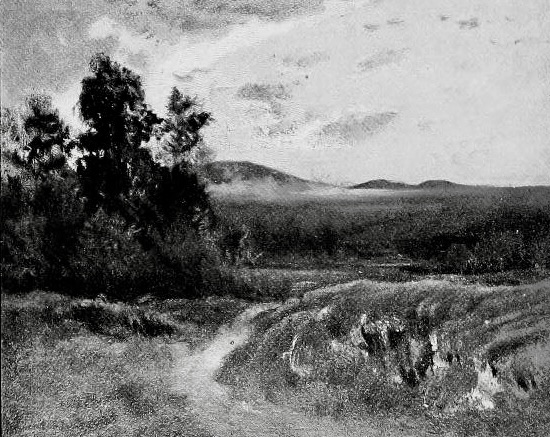
Here Coolbrith seems to evoke a similar cyclic pattern, but the final focus has become more explicitly personal, a slight shift away from emphasizing transition to emphasizing resistance. While details of place in both of these poems—as in the William Keith illustrations included in her book—can evoke particulars, the poems rely at least to some degree on the Edenic reputation of California as that unbelievable place of natural beauty while, here again, complicated by a recognition of its inhuman power. In some ways, these works align with the best of the Romantic movement, which could embrace both a host of golden daffodils and the imposing indifferent presence of Mont Blanc.
Mount Ina Coolbrith
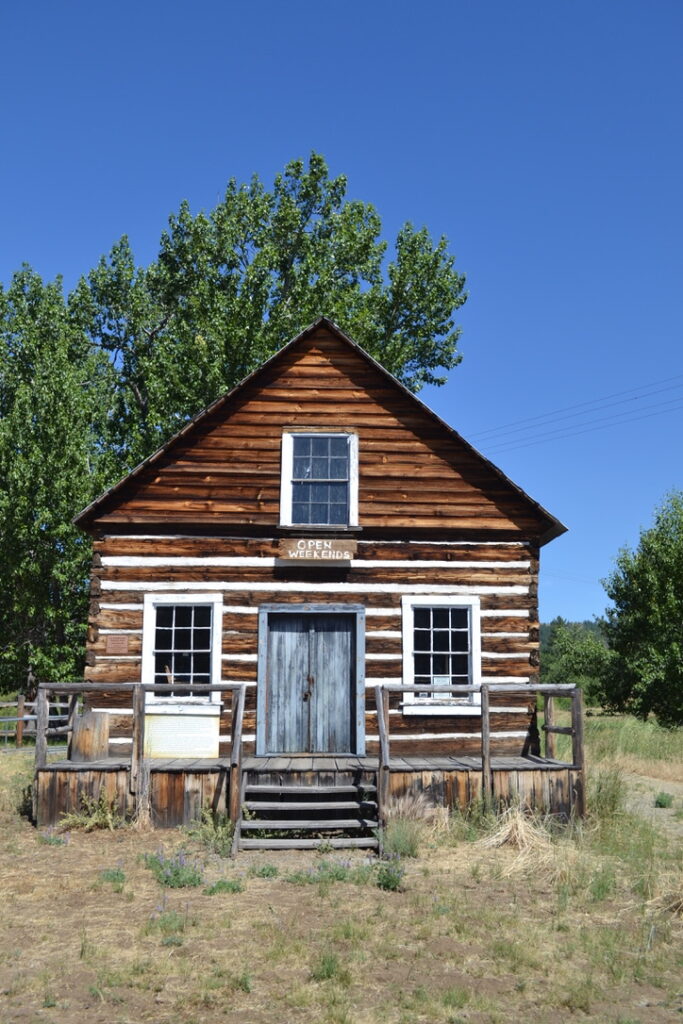
And what of Beckwourth, the person, according to biographer George, that Coolbrith recalled as “one of the most beautiful men she had ever seen” (21)? He set himself up in a trading post cabin, supposedly the first such structure emigrants would have seen in California. Alas, the cabin burned down twice. A third one still survives, though it’s been moved to a different site where, for a time, it served as a museum, though now it is apparently closed. According to Del Bene, after the cabin fires, Beckwourth didn’t stay much longer in California:
By 1855 trader Beckwourth left his wagon road, moved to Colorado and opened a general store. There were adventures sufficient between 1855 and his death in 1867 (or 1866) to fill most lifetimes. He fought against the Apaches and the Cheyennes as a militia member. He was a scout for the military at the Sand Creek Massacre (November 29, 1864) and was either poisoned or died of natural causes when guiding the military to a Crow village in Montana. Say what you will about James P. Beckwourth, his was not a boring life.
Coolbrith’s poetry, argues Walker, has much in common with eastern women poets that she classifies as Nightengales. And that’s true. But Coolbrith’s work, as Walker says, is western, and I think notably Californian in its settings and in its genesis, drawn from an early pioneer experience, a literary environment separate from the dominant eastern influences, and a life of hard work—of benefit to herself, her family, and even devoted library patrons.
One of those patrons was Jack London. Writing of London’s childhood love of books, biographer Daniel Dyer observes:
Fortunately for Johnny London, in Oakland there was a wonderful librarian, Ina Coolbrith, who encouraged the ten-year-old and began to direct his reading. When he was thirty vears old and already a world-famous writer, Jack London wrote a letter to her, thanking her for all she had done for him. He called her “a goddess.” (14)
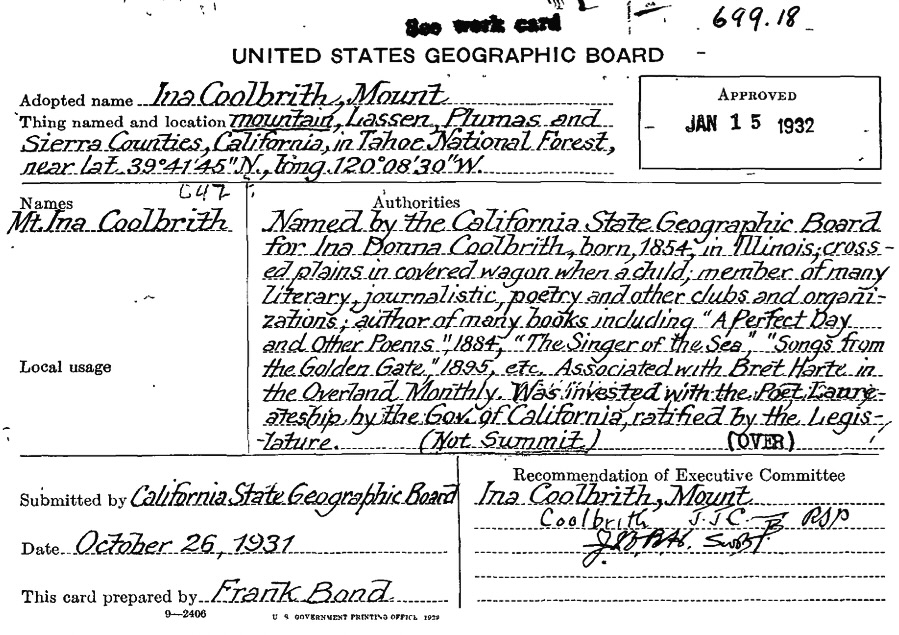
That’s a big promotion from the earthly monarch figured in Beckwourth’s teasing presentation of her new California realm. Perhaps, in this way, if no other and across decades, London and Beckwourth shared a point of view, recognizing a similar strength of character in a young girl and the literary woman she would become. In her own time, her accomplishments were conspicuously recognized when, in 1915, she was named California’s first poet laureate. But I like to think more about a 1932 posthumous honor, when an eight thousand foot peak was named for a goddess.
Fittingly, Mount Ina Coolbrith is located just six miles south of Beckwourth Pass, geography and literary history here making a pleasing symmetry.
Sources
Unless otherwise attributed, all photos by the author.
Beckwourth, James P. The life and adventures of James P. Beckwourth, mountaineer, scout, and pioneer, and chief of the Crow nation of Indians. Written from Dictation by T. D. Bonner. Harper and Brothers, 1856. Internet Archive. https://archive.org/details/GR_347/page/n7/mode/2up. Accessed 26 May 2026.
“Beckwourth Pass.” Native Daughters of the Golden West. 1973. The Historical Marker Database. Marker Number 336. https://www.hmdb.org/m.asp?m=143424. Accessed 21 July 2026.
Beers, Terry. “Ina Coolbrith’s ‘The Mariposa Lily.’” Rewriting California. 23 March 2023. https://rewritingcalifornia.com/ina-coolbrith-the-mariposa-lily/. Accessed 23 July 2026.
Bonner, T. D. The Mountain Minstrel, Containing a Collection of Temperance Songs, Hymns,and Glees, Etc. G. S. Bonner, 1847. Google Books. https://www.google.com/books/edition/The_Mountain_Minstrel_Containing_a_Colle/pzZYAAAAcAAJ?hl=en&gbpv=0. Accessed 18 July 2026.
Coolbrith, Ina. Songs from the Golden Gate. Houghton, Mifflin, 1895. Internet Archive. urn:oclc:record:1157886903. Accessed 8 July 2026.
Del Bene, Terry A. “James P. Beckwourth and his Trail.” True West: History of the American Frontier. 20 January 2013. https://www.truewestmagazine.com/article/james-p-beckwourth-and-his-trail/. Accessed 23 July 2026.
Dyer, Daniel. Jack London: A Biography. Scholastic, 2002. Internet Archive. urn:lcp:jacklondonbiogra00dyer:epub:d8d0948d-c1cf-48d2-94f7-89748e1e02ac. Accessed 6 July 2026.
George, Aleta. Ina Coolbrith: the Bittersweet Song of California’s First Poet Laureate. Shifting Plates P, 2015. Internet Archive. urn:lcp:inacoolbrithbitt0000geor:epub:d0c6b1b7-391f-45dd-8b7a-05e53e9b1c5b. Accessed 26 May 2016.
Rhodehamel, Josephine DeWitt. Ina Coolbrith, Librarian and Laureate of California. Brigham Young U P, 1973. Internet Archive.urn:oclc:record:1285657332. Accessed 28 May 2026.
Sierra Valley Preserve + Nature Center. Feather River Land Trust. https://www.frlt.org/outdoor-adventures-lost-sierra/sierra-valley-preserve-nature-center/. Accessed 27 July 2026.
United States Geographic Board. Decision Card. “Ina Coolbrith, Mount.” 26 October 1931. https://edits.nationalmap.gov/apps/gaz-domestic/file/faa899cd-8fba-5e81-9c09-9028330ffed2/view. Accessed 16 July 2026.
Walker, Cheryl. “Ina Coolbrith and the Nightingale Tradition.” Legacy. Vol. 6, No. 1. (1989), pp. 27-33. JSTOR 129.210.6.137. Accessed 12 June 2026.
Want to be notified when new posts are added? Subscribe to our newsletter.